

The Recording
As with our featured recordings of fiddler William Craig, this track is from the UCSB Cylinder Audio Archive at UC Santa Barbara Library [Item Special Coll., Performing Arts Cylinder 8500]. It is published online by the archive at http://www.library.ucsb.edu/OBJID/Cylinder8500.
The original is a brown wax, home-produced cylinder recording that was most likely made at some point in the popularity of the recording medium between 1890 and 1929. The holding archive has confirmed that nothing is known of the provenance of the recording or of the musician it features.
This audio is potentially highly significant on a number of counts, not least because it is one of the earliest known captures of Scottish fiddle music and possibly the oldest surviving recording of such music made for non-commercial purposes. However, while it offers an invaluable opportunity to enlighten our understanding of the fiddle tradition, it presents a number of challenges in terms of by whom, when and where it was made.
The recording has already attracted the attention of the contemporary composer Aaron Helgeson and inspired his work ‘Brief Regards for Sometimes’ (2006), The work, he says:
… is based on a late 19th-century homemade wax cylinder recording of “Professor MacLellan of Berkeley” playing an unknown fiddle tune, recently digitized by the University of California Santa Barbara Cylinder Audio Archive. The recording was made with Thomas Edison’s cylinder phonograph technology. Using a recording attachment often sold with phonographs for home use, a blank wax cylinder was engraved with 2-3 minutes of sound in the form of tightly wound grooves. When a new recording was needed, the cylinder was simply smoothed down again, sometimes leaving faint traces of sound from previous recordings.
One sublime feature of “Professor MacLellan’s” recording is the presence of audible noise — some produced by the incomplete erasure of previous recordings that left a sustained hiss on the fiddle tune, others produced by the heavy phonograph needle resting on the cylinder (spinning at 120 beats-per-minute) giving the recording a constant pulse of pops and clicks. This noise weaves in and out of the music, sometimes even masking the fiddle tune completely.
In ‘Brief Regards for Sometimes’, both MacLellan’s fiddle tune and the accompanying noise are meticulously transcribed, fragmented, and arranged for an arpeggiated barriolage of natural harmonics that undulate between scratchy and piercing (when loud) or pure and glassy (when quiet).
[https://www.aaronhelgeson.com/brief-regards-for-sometimes]
It is hoped that following exploration will stimulate a discussion around the origin, content and potential importance of the recording. Comments on the audio and text are being solicited directly but all listeners are encouraged to contribute any knowledge or thoughts they have to offer. This page should therefore be taken as a first draft that will be revised in the light of readers’ input, suggestions and emerging information. All contributions will be acknowledged.
The Music
As announced at its start, the recording features “A selection on the violin by Professor MacLellan of Berkeley” and the archive website correctly identifies the tunes played as the strathspey ‘Calum Crubach’, and the reels ‘The Reel of Tulloch’ and ‘Mrs. McLeod of Raasay’. The first tune is also commonly known in English as ‘Miss Drummond of Perth’ and the second as ‘Reel o’ Thuilleachan’ or, in Gaelic, as ‘Ruidhle Thulaichean’.
These tunes remain popular among Scottish musicians and have appeared in numerous published collections for fiddle and piano over the past three centuries. They also feature in collections for Highland bagpipe and all are associated with dances of the same names as the tunes. ‘The Reel of Tulloch’ is published and heard a strathspey as well as a reel, the two tune types being often played in sequence, and long variation settings of the tune as a reel were written down in the eighteenth and nineteenth centuries. See, for instance, James Scott Skinner Harp and Claymore, (London 1904); James Scott Skinner The Scottish Violinist (Glasgow n.d.) , pp. 24-25 and David Young’s older set from Bremner’s Scots Tunes as feaatured in David Johnson’s Scottish Fiddle Music in the 18th Century (John Donald: Edinburgh 1984), pp. 102-103.
In the following extract, the recording has been subjected to a degree of noise reduction to allow the performance to be heard and studied better:
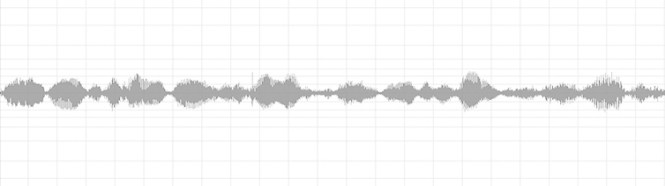
As we can hear, the playing is highly assured, steady, accomplished and ‘authentic’ in the sense that it suggests a player closely engaged with Scottish traditions. The repertory, tempi, phrasing, style and execution would indicate a musician familiar or associated with Highland and Hebridean dance, bagpipe or puirt-à-beul vocal musics. We may even be listening to a fiddler who might also have been be piper. Hear, for instance, the crisply executed birls:
As there are few contemporary reference fiddle recordings available for comparison, save Scott Skinner’s and MacKenzie Murdoch’s highly idiosyncratic commercial releases, it is difficult to to say with any confidence how typical the playing was and where it fits into the range of styles that were to be heard just before and during the first decades of the twentieth century. The playing on the following recording of the Cameron brothers (‘The Cameron Men’) of Angus made in 1934 is lively but less Highland in character and perhaps already displays the regulating hands of the country dance authorities and BBC as influencers and gatekeepers of traditional music in the interwar years:
Cameron Men ‘Miss Drummond of Perth / Maggie Cameron / The Favourite (strathspeys)’ (78 rpm Beltona Bel 3134)
Many current mainland Scottish fiddlers, particularly those in reel and strathspey orchestras and in country dance bands, generally play ‘Calum Crubach’ in a more measured, graceful manner than the recording under consideration here. There also tends to be a close adherence to the published violin scores, including their marked bowings and ornaments, with the more ‘schooled’ players also tackling the published variation settings, such as those by Skinner. Exceptions include those fiddlers who play in bagpipe-led folk bands where that instrument sets the character and style of the fiddle setting and those who have been inspired by, and draw repertory, from the Highland and Cape Breton repertory and styles, such as Patsy Reid (A Glint o’ Scottish Fiddle Classy Trad Records). Alastair Fraser and Jody Stecher play a fairly modestly-paced version (The Driven Bow Culburnie), Canadian fiddler Kiérah plays the tune powerfully in reel time (The Stonemason’s Daughter Kiérah) while Tim MacDonald and Jeremy Ward give a very lively rendition on baroque fiddle, with cello, using the eighteenth-century Niel Gow score:
Hanneke Cassel offers what she describes as a “faster, percussive, rythmic and wilder” “Cape Breton” dance version of the tune in her online video tutorial (https://www.fiddlevideo.com/miss-drummond-of-perth) and the tune is also heard in the Scottish-influenced Donegal fiddle tradition as a bouncing Highland Fling, as played by Con Cassidy (The Brass Fiddle Claddagh Records).
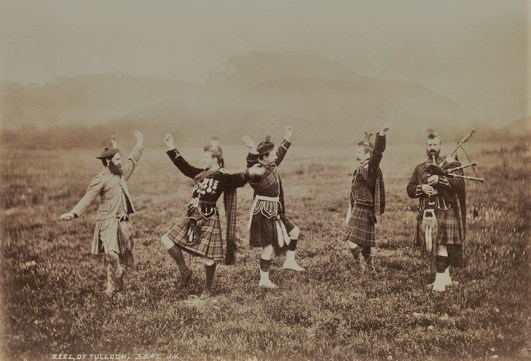
James Scott Skinner recorded ‘The Reel o’ Tulloch’ in Glasgow in 1899 for his first ever release on the Berliner label (Berliner Ber 7930 matrix 3597) but, as yet, a listening copy has not yet been located. As with the opening strathspey, somecontemporary musicians take a highly score-based approach to the tune, as in the varied setting recorded by Chatham Baroque (Reel of Tulloch Dorian and Dorothee Oberlinger (The Passion of Musick Deutsche HM ), that can often result in a kind of swaggering march rather than a lively piece suited to dancing the reel. Mouth music versions, as diddling in Scots and as Gaelic puirt-à-beul , are known [William Lamb (ed.) Keith Norman MacDonald’s Puirt-à-Beul. The vocal dance music of the Scottish Gaels. (Taigh na Teud, Isle of Skye, 2012); https://www.scotssangsfurschools.com/mrs-macleod-of-raasay%5D and there are examples of lively vernacular playing in mid-twentieth century recordings of rural mainland Scottish fiddlers such as John Grant of Strathspey (http://tobarandualchais.co.uk/en/fullrecord/11513) and by Hector MacAndrew (1903-1980). MacAndrew is interesting as he was a ‘schooled’ violinist but from a piping background (Legend of the Scottish Fiddle Greentrax). Surprisingly, Angus Grant, regarded by many as the epitome of Highland fiddling in Scotland, appears to prefer a fairly refined setting (The Glengarry Collection Volume 2 DVD MelBay).
Both reel tunes are used extensively for Highland dancing, where they are played on bagpipes.
The Cape Breton piper Barry Shears, who has auditioned the cylinder recording, is of the opinion that the rhythm in the playing is reminiscent of Cape Breton dance music. However, he notes that the setting of ‘Calum Crubach’ is somewhat different from what he has encountered before but that this is not surprising as there has always been much personal and regional stylistic variety across Nova Scotia. He reports that he has recently listened to another extremely rare, but unfortunately less clear, cylinder home-made recording in Pictou County, from around the same time as the one under consideration here. In that case the fiddler, J. J. Chisholm (b. Antigonish, c.1851) was also a piper, but with a quite different fiddle style from that heard on this cylinder. [Private communication]
‘Calum Crubach’ has long been an integral part of the musical accompaniment of traditional step dancing in Cape Breton, as confirmed in interviews with older step dancers undertaken in the 1980s [Allister MacGillivray A Cape Breton Ceilidh (Sea-Cape Music Ltd., Sydney 1988)]:
Danny “Dougald” Campbell: “I had a few tunes that I liked to dance to: one was ‘Christy Campbell’ and another was ‘Calum Brubach’. (p. 40)
Willie Fraser: “…I’d jig [vocalise] a tune – a tune like ‘Calum Crubach’ – and our little Roddie used to jump up in the crib. (p. 57)
Angus Archie Gillis: “All this happened before 1930. …the fiddler was “Little” Jack MacDonald. I jigged my tunes for him – ‘Calum Crubach’ and ‘Lord MacDonald’ for a fast figure – and he played them. (p. 59)
Flora MacIsaac MacDonnell: “My father played a number of different tunes and we had steps for each of those tunes. We started off dancing to ‘Gille Calum’, ‘Calum Crubach’ and several others. (p. 92)
John D. MacIntyre: When I was younger, the fiddlers didn’t use too many strathspeys. My fiddlers had ‘King George the Fourth’, ‘Calum Crubach’ and a couple of other traditional ones. (p. 100)
Diane MacIsaac Miller: “I remember that ‘Devil in the Kitchen’, ‘Dusty Miller’ and ‘Calum Crubach’ were some of our favourite dancing tunes. (p. 103)
Gussie MacLellan: “…[father’s] favourite tune was ‘Calum Crubach’ and that was the one that he played for stepdancing. That tune stayed both with me and my brother Jim Dan and, when fiddlers asked us what we wanted, we always told them ‘Calum Crubach’. That was the tune.” (p. 116)
Aggie MacLean MacLennan: “‘Calum Crubach’ is my tune, and when I hear it I say, “Where ‘s my dancing shoes?”” (p. 119)
Sadie MacMullin MacNeill: “You cannot dance unless you’re attentive to the tune. You have to have the tune in your mind all the time you’re dancing. That’s why I liked to dance to familiar tunes – because I knew what was coming next… A stepdancer knows and will ask for certain tunes. I often asked for ‘Calum Crubach’, ‘King George the Fourth’ and ‘Muilenann Dubh'”(p. 132)
Father John Angus Rankin: “I’m sure that in earlier times the dancers had certain steps for certain tunes. Also, there were certain tunes they danced to – ‘Calum Crubach’, ‘King George’ – and they had steps to match these tunes. (p. 152)
The popularity of the tunes is endorsed by Frank Rhodes :
From the time of the introduction of the modern Highland Games dances in about 1939 up to 1957, the form in which the Cape Breton solo dances were most frequently seen was as extempore continuous stepping. They were danced to fast strathspeys and reels played on a violin. The favourite tunes was ‘Calum Crubach’ (Miss Drummond of Perth). However, they were originally taught as solo dances with fixed sequences of steps, each dance having its own tune or tunes. [JF Flett and TM Flett Traditional Step-dancing in Scotland (Scottish Cultural Press, Edinburgh 1996) p. 188]
The fascinating stepdance-focused rendition of the tune by John MacDougall (c. 1925 -2008) featured in this video may help us understand how it was formerly played and heard in that solo dance context in Cape Breton:
The tune features on a number of issues of Scottish music in Cape Breton, including a field recording of Mary MacDonald (The Music of Cape Breton Volume 2 Topic Records) and an album of Willie Kennedy (1925-2014) (Cape Breton Fiddle Rounder). The recording of Mary MacDonald (1897-1983) demonstrates why she is recognised as “an ideal representative of the older Cape Breton fiddle tradition” on account of her music being “marked by a strong sense of timing and drive… her style marked by the use of complex bowing patterns superimposed on the underlying single-stroke bowing style” [Liz Doherty The Cape Breton Fiddle Companion (Cape Breton University Press, Sydney 2015) p. 226] combined with a variety of left hand ornaments, bagpipe-influenced intonation and drones. The recording of Kennedy is also ‘old style’ in character and displays some creative deviance from the melody as commonly published. However, while driving in style, the rich complexity found in these recordings is absent in the MacLellan cylinder recording and supports the view of another informed listener who has expressed the opinion that the playing seems “too clean for Cape Breton but too dirty for Scotland” [Private communication].
The reel tunes on the cylinder do appear less frequently in the literature and discography on Cape Breton music – on Alan Syder’s Cape Breton Fiddle Recording Index both are noted as appearing on around 10 modern commercial recordings in contrast to ‘Calum Crubach’ which appears on over 30. [https://www.cbfiddle.com/rx/index.html]
In comparing the MacLellan cylinder with other more recent recordings we must accept that there may have been much greater personal, local and regional variety in playing than we know or expect today and that what we are listening is possibly a snapshot of music at a point before it transitioned to what we currently recognize and find familiar. We should also be wary of assuming that traditional musical styles are ‘ancient’and conservative rather than the results of relatively recent creativity and development, at both the individual and community levels.
The Player
But who was Professor MacLellan of Berkeley?
There is no known Scottish fiddler of that surname in the standard literature and in the discographies on Scottish music, although this should not be not surprising as traditional musicians of the later and early twentieth century are still not well documented. One tantalizing candidate is the piper and tune writer John (Jock) McLellan of Dunoon (1875-1949), who was known to be a fine fiddle player. Unfortunately, there are no known recordings of him playing the instrument. However, while his musical background and dates certainly fit, his military and police service records appear to work against any residence in Berkeley, California, assuming the tape refers to that location and not Berkeley in Gloucestershire, England.
There is one tentative link in the rather scant biographical information relating to John MacLellan. After his father died at Dunoon in 1882 John’s mother took him and his siblings Sarah, Archie, Margaret, Neil and Ann to her native island of Jura where they remained for the subsequent eight years or so before returning to Dunoon. It has been assumed that John learned his music during this period and suggested that his bagpipe tutor may have been Neil Lindsay of Jura (c.1862-1945).
Neil was the nephew of the excellent player Hugh Lindsay who had been taught by the famous Angus MacKay. [Bridget Mackenzie Piping Traditions of Argyll (College of Piping, Glasgow 2004), pp. 4278-283] At some point during the 1880s he emigrated to San Francisco where he became a ‘significant member of the Scottish community’ and a musical and business associate of piper and publican Iain S R Tevendale. [Bridget Mackenzie The Piping Traditions of the Inner Isles (John Donald, Edinburgh 2012, pp. 95-98]
Looking further afield, all followers of Nova Scotia Scottish fiddling will know that several dynasties of fiddling MacLellans (often spelled Maclellan or Mclellan) flourished there throughout the nineteenth and twentieth centuries. [Allister MacGillivray The Cape Breton Fiddler (College of Cape Breton Press, Sydney 1981) pp. 58-65 and 184-185; MacGillivray 1988; Doherty 2015 pp. 263 – 267]
Of these, a potentially fruitful link is to be found in the descendants of Donald MacLellan, Dòmhnall Gobha (Donald the Blacksmith), one of Cape Breton’s noted bards who arrived in Pictou from Scotland in 1819 as a 12 year old with his parents on the ship Economy . On that journey he met and was greatly influenced by Iain MacIlleathain, Bàrd Thighearna Cholla (John MacLean, Poet to the Laird of Coll) (1787-1848), composer of the famous emigrant song A’ Choille Ghruamach (The Gloomy Forest). According to the BBC Scotland website:
Nuair a ràinig an teaghlach Ceap Breatainn bha iad a’ fuireach ann am Margaree an Siorrachd Inbhir Nis. Dh’ionnsaich Dòmhnall ceàird na goibhneachd anns a’ bhaile Fhrangach Arichat, agus dh’ionnsaich e a’ chànan Fhrangach aig an aon àm. Ghluais e an uair sin gu Srath Latharna an Siorrachd Inbhir nis.
When the family arrived in Cape Breton they lived in Margaree, Inverness County. Donald learned the blackmsmith’s craft in the French city of Arichat, learning the French language at the same time. He then moved to Strath Lorne.
[https://www.bbc.co.uk/alba/oran/people/domhnall_macillfhialain/]
Donald married Mary McIssac (b. 1821) and together they had a large family. In 1868 they moved to Grand Mira, where he composed poetry until his death in 1890 at the age of 83. Their children were:
-
-
- Angus “Aonghas Pushie”
- Donald Jnr
- Catherine
- John
- Annie
- Mary
- Daniel
- Francis
- Mary or Molly
- Vincent
-
[Mabou Pioneers Vol 1 pp. 697-701]
The first-born, Angus (Aonghas “Pushie”) MacLellan, was raised in the musical community of Broad Cove in Inverness County and at Grand Mira North, and became established as a carriage-maker at Sydney where he was recognised as a “fine fiddler” [Doherty 2015 p. 267] and “talented musician”. [Mabou Pioneers 1955 p. 704].
He appears to have married twice, the first time to an unidentified Irish woman. This likely to have been before his business premises at Sydney was destroyed in a fire after which he moved to California in 1883 [MacGillivray 1981 p. 64].
Mabou Pioneers [2014 vol. 1 p. 378] states that his second wife was Catherine Anne Grant (d. Alameda, California, 1947), the daughter of William Grant a native of Antigonish who moved to Mabou where he was postmaster, stipendiary magistrate and customs officer. Catherine’s older brother William Peter Grant was a contractor who, after marrying in Cape Breton, moved to Berkeley, California where, with his wife, he remained and raised a seven children. Her sister Margaret married Hugh MacDonald of Judique (d.1945) and also moved to San Francisco where they had six children. [Mabou Pioneers 2014 pp. 377-9] It is said that Angus and Catherine’s marriage produced no issue.
There is good evidence for Angus in the Berkeley business directories and official records. The Berkeley Street Directory of 1896 [p. 396] has Angus Mclellan (of company Nelson and Mclellan) with premises on Mary Street near Addison Street junction and at 2041 University Avenue. The Great Register for Alameda County [Oakland Township Berkeley Precinct 3] records that Angus McLellan, born Nova Scotia, wheelright, age 51, became a naturalized in the United States in 1886, as registered on 22 October 1892. The California Great Registers 1866-1910 records his voter registration in the Berkeley Ward on the same date and estimates his birth year as 1841. The Great Register, [Alameda County, Berkeley Precinct 8] records that a Joseph John McLellan, a carpenter, aged 23 born Canada was naturalized in February 1896 by virtue of his father’s status. It also confirms that father and son were resident at 2118 Mary Street and gives Angus’ age as 62, with an estimated birth year of 1834.
The United States Census of 1910 gives Angus’ age at 73 and a birth year estimate of 1837. His year of immigration is estimated as 1887. At the time of the census he was living with his 35 year old, house carpenter son Joseph J McLellan and 31 year old real estate stenographer daughter Mary A McLellan, both of whom had been born in Canada. Angus is recorded as of Scottish ethnicity and having been married for the second time some 12 years previously, c.1898. This data appears to confirm that his children were from his first marriage and were born before he left Nova Scotia. The vital and church records for Nova Scotia include details of children born in Sydney to an Angus McLellan and a Margaret Macdonald. These include a Joseph John and a Mary Ann, both of similar ages to those living with Angus at Berkeley and are therefore worthy of further investigation.
According to the California Death Index Angus D Mcl,ellan passed away in 1916 at the age of 74.
The 1881 Canada Census shows brothers John, Frank and Vincent Maclellan residing with their 74 year old father Donald at Grand Mira. Before long, however, all three had followed Angus’s move to California [Doherty 2015 p. 267]. Their presence in California is confirmed by the official records.
Frank Mclellan, a carpenter and noted as an outstanding step dancer, appears in the 1900 United States Census as a patient at City and County Hospital, San Francisco His birth year is given as 1853 and his year of naturalization as 1883. He remained single and died in Californian in 1929. [MacGillivray 1988 p. 166]
The California Great Registers record that John Mclellan became naturalized in 1884, aged 39. The 1920 Census gives his birth year as 1845 and his immigration year as 1865 (presumably correctly 1885). He was an unmarried, retired labourer in lodgings in San Francisco Assembly District 33.
The Canada Census returns show that Vincent McLellan (Bhinsent Dhomhnuill Ghobha) (died Syndey 1935) was two years younger than Frank although there is some confusion regarding his birth year. Mabou Pioneers; MacGillivray 1981 and Doherty 2015 all give 1856, while the 1901 Canada Census offers around 1858. However, the baptismal record at the church of St Margaret of Scotland, Broad Cove, Inverness, Nova Scotia, has the date of 1 June 1854.
[“Nova Scotia, Antigonish Catholic Diocese, 1823-1905,” database with images, FamilySearch(https://familysearch.org/ark:/61903/1:1:JV92-B8B : 9 March 2018), Vincent Mclellan, 25 Jun 1854; citing Baptism, St. Margaret of Scotland, Broad Cove, Inverness, Nova Scotia, Canada, Catholic Church parishes, Antigonish Diocese, Nova Scotia.] Nova Scotia, Antigoniosh Catholic Diocese, 1823-1905 at FamilySearch.org has St Margaret of Scotland, Broad Cove, Inverness NS birth date 1 June 1854 and baptism on 25 June 1854]
It is said that Vincent returned to Canada in 1890 [MacGillivray 1981, p. 64], which makes sense as that was the year of his father’s death. Leaving Berkeley in 1890 would, however, reduce the possibility of him having been recorded there on the cylinder in question as the technology was still relatively new. In 1891 he published his acclaimed collection of Cape Breton Gaelic verse Failte Cheap Breatuinn. He was certainly back in Nova Scotia by 31 March 1901 when the The Canada Census recorded him age 43, lodging as a boarder at Inverness. He is noted in the return as a single, Nova Scotia-born Canadian of Scotch ethnicity and Roman Catholic religion.
Vincent lived as an itinerant musician and is remembered as a good step dancer and fiddle player who had a considerable affect on the musical development of many individuals:
“always putting stress on the art of reading music, Vincent became an influential member of Cape Breton’s fiddling community. He assisted fellow players… in their study of music theory, and he judged fiddle contests and taught music in the metropolitan area.” [MacGillivray 1981,, p. 65]
A tribute of 1933 by Joseph MacKinnon of Sydney described Vincent as:
…a dancing master, a composer of songs, a good singer, with good taste for the songs of others. He is clever in vocal music (having directed choirs and orchestras) and the theory and rendition of instrumental music, performing with skill on the piano, violin, bagpipes and some brass instruments… Vincent MacLellan is perhaps, above all else, a Scot who will be forever one of our Cape Breton landmarks in matters dear to the Highland heart. [MacGillivray 1981 p. 65]
Cape Breton fiddler Gordon F. MacQuarrie (1897-1965) of Dunakin, Inverness County was one of those who “…benefited from the assistance and encouragement offered by… Vincent A. MacLellan, a prominent Cape Breton violinist.” [MacGillivray 1981, p. 68]. In his book The Cape Breton Collection of Scottish Melodies for the Violin (J. Beaton: Medford,1940), he included Vincent’s reel ‘My Brother’s Letter’, a tune created following the welcome receipt of a letter from his brother Frank in California.
Ronald MacLellan (1880-1935), head of another family of musical Cape Breton MacLellans, was also influenced by Vincent [MacGillivray 1988, p. 62] as related by his son, fiddler Donald (b. 1918):
My dad played most everything: marches, strathspeys, reels and jigs and stuff like that. He was a very exacting player – one note and he’d criticise you. If you’d changed anything – one note from a piece of music – he’d know that right off the bat. He’d tell you, “Oh, you missed one” and he’d tell you what finger you should have used, too. He could tell it that way. The majority of the old time players played by ear and they seemed to get along with the playing pretty well, but my dad was one of the few who could read music. There was a fellow down in Highland Village named Vince MacLellan and he was a professor of music [emphasis added]. My dad started off with a mail course but then, as he got more into it, apart from corresponding, he went down to MacLellan a lot of times. He took some lessons there, too, I think.
[‘Donald MacLellan and Doug MacPhee Cape Breton Musicians’ published online at https://www.mustrad.org.uk/articles/mclellan.htm%5D
Give that we know there were musical Maclellans at Berkeley what, can we learn of the context in which they settled?
Scottish Music at Berkeley, California
The San Francisco Bay Area developed rapidly in the decades before and after 1900. The city of Berkeley population grew from a population of 5,101 in 1890 to 13,214 in 1900 and 40,434 in 1910 40,434. [bayareacensus.ca.gov]. The wider area had a substantial number of residents who identified as Scottish and this community sustained a number of organisations and associations including The St Andrew’s Society of San Francisco, founded 1863, The Caledonian Club of San Francisco of 1866, The St Andrew’s Society of Oakland of 1878, and perhaps most significant here, The Scottish Thistle Club, established in 1882. This organisation had a membership of over 600 by 1890. It was established as:
…an organisation composed of Scotchmen and Scotchmen’s sons, and aims to develop the social and intellectual improvement among its members. The purposes for which it is formed are to preserve the athletic games, as practiced in ancient Scotland, to keep alive fond recollections of the ancient customs and amusements, to encourage the establishment of literary exercises and lectures, to bind more closely in friendly relations the kilted lads and bonnie lassies of their mother country, and to assist their brother members in sickness and distress. [San Francisco Morning Call 17 May 1891]

The Scottish organisations held gatherings, Highland Games, concerts, balls, picnics, smokers, banquets and parties that regularly attracted very large audiences. Piping was a central part of their events as was national and traditional song and dance. Neil Lindsay, mentioned above as the possible tutor of John Maclellan of Dunoon, was a Pipe Major of both the Caledonia and Thistle clubs of San Francisco until the licenced premises of Tevendale and Lindsay were destroyed in the of April 1906. After that loss he returned to Jura and worked as a crofter while living in a cottage he named Frisco. Bridget Mackenzie [2012, p. 96] mentions a scrapbook compiled by Neil during his time in California that contains many musical references that is held in the library of Peter Younson, historian of Jura but this has not been inspected.

San Francisco Scottish Thistle Club in the early 1900s
Relevant information on the activities of the Scottish societies can be found in the archives of the local press. The San Francisco Chronicle (04 Aug 1885, Page 2), for example, recorded a night that concluded with ‘The Reel o’ Tulloch‘ [emphasis added] danced by young women, although, unfortunately, the musicians are not mentioned:
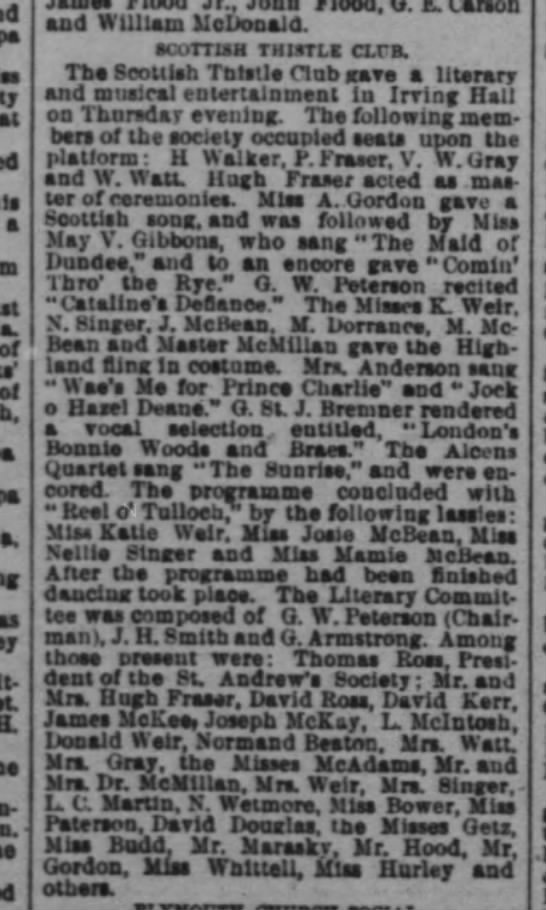
The following examples, with added emphases, may refer to our Professor MacLellan, his music and his family:
A very enjoyable party was given to Mr. and Mrs. Henry MacSorly to celebrate the birthday of their youngest son Colin on Saturday evening, May 2, at 618 Stevenson Street. The festivities were inaugurated by some some stirring Scottish airs on the bagpipes by Professor Donald Weir, The music for dancing was furnished by Mr. Mclellan of Berkeley, ably assisted by A. MacSorly… Those present [included]:… Mr and Mrs. A. McLellan… Miss E, McLellan, Miss T. McLellan, Miss M. A. McLellan… [San Francisco Call, Volume 79, No. 161, 9 May 1896, p. 11]
Berkeley Surprise Party One of the pleasant events of the week was a surprise party given to Mr. and Mrs. M. McDonald of Berkeley by Neil Lindsay, the popular Scotch piper and a number of friends of San Francisco. Dancing and singing were the order of the evening. Among those present beside the host and hostess and their daughters were the Misses McLellan, Miss Syney, Mr. and Mrs. Carnie, Mr. and Mrs. Grant, Mr and Mrs Ferguson, Mrs M. Neil, Mrs Mclellan and Messrs. Neil Lindsay, D. McLellan, Beaton and McDonald. [San Francisco Call, Volume 79, Number 78, 16 February 1896.]
Scots Dance and Feast. San Francisco Thistle Club Holds its Sixteenth Annual Hogmanay Supper The evening’s amusement started with dancing to Scottish music and among the dances were the ‘Highland Schottische’ and the ‘Reel o’ Tulloch‘. Donald Weir officiated as piper. [San Francisco Call Volume 81, No. 32 1 January 1897. p. 14]
Friends Greet Scotchman on his Eightieth Birthday Donald Chisholm’s eightieth birthday was celebrated in good old Highland fashion by his friends last Thursday by a surprise party his many old time friends gave him at his home. During the evening an address was read by D. J. McFarland of the Caledonian Club. Speeches, songs and dancing were intermingled with other diversions. The singing by Mr. Blum and Mr. Chisholm was highly appreciated. Lord MacDonald’s reel was danced by Mr Chisholm, his brother William, Mrs Mary McDonald and Mrs. D. Fraser, Mr. McLellan and Mr. McDonald rendered several instrumental numbers in a pleasing manner. W. F. Grant of Berkeley escorted a number of Mr. Chisholm’s friends from Berkeley. [San Francisco Call Volume 98, No. 11, 11 June 1905, p. 1]
A Professor?
Attempts to locate a Professor MacLellan working in or retired from formal education in and around Berkeley have not been successful to date, although a comprehensive examination of the records of schools, colleges and the university might yet bear fruit.
However, it is highly likely that the term was not being used in these contexts. In the late nineteenth and early twentieth centuries it was normal to respectfully describe any professional musical soloist of note as ‘professor’ This was particular true in press articles and in literature announcing concert performances and where the musician had a particular skill or represented a specific genre. For instance, Timothy McCarthy, an uillean piper based in San Francisco and perhaps the only Irish piper performing publicly in the Pacific States of California, Oregon and Washington in the 1890s and someone who played at Scottish Thistle Club events, was noted in news reports as Professor McCarthy. [San Francisco Call March 14, 1898 p. 10. See also: http://livesofthepipers.com/1mccarthytimothy.html%5D A report of one event held in April 1896, noted that the entertainment programme included Highland piping from ‘Professor’ Tevendale, a Highland dancing exhibition by ‘Professor’ R. D. Findlay and Irish pipes from ‘Professor’ McCarthy.
In addition, professional music teachers would commonly self-describe themselves as professors, although this was commonly decried by those with formal qualifications at the time.
Some Conclusions and Questions
- The foregoing argues that the cylinder recording of Scottish traditional music played on fiddle by Professor MacLellan of Berkeley is potentially of considerable cultural significance as a snapshot of music from the earliest years of sound recording. It is therefore among the oldest surviving captures of Scottish fiddle music and perhaps the earliest made for non-commercial purposes.
- The music on the recording is an invaluable snapshot of one individual’s playing at a specific time and place although there is no solid information as to who the player is, where it was made, by whom and for what purpose.
- The genre of Scottish fiddle playing embraces a wide range of styles and these have always varied across time and across place and between individuals.
- There may be clues in the music as to the cultural context of the musician.
- The musical evidence points towards a Highland/piping/Gaelic context.
- The most likely locations supporting such culture were in Scotland and Nova Scotia, Canada.
- There is evidence that at least two Cape Breton Scottish fiddlers named MacLellan (Angus and his brother Vincent) were living in Berkeley during at least part of the time when the recording is likely to have been made.
- Of the two, Vincent is most likely to have been titled ‘Professor’ although he is thought to have left Berkeley early in the likely recording time frame.
- As a music teacher, Vincent is likely to have have pursued a more refined rather than a highly evolved local or personal idiosyncratic style.
- There was a lively Scottish community in Berkeley at the time that embraced Nova Scotians.
- The music on the recording contrasts with much of the music of Cape Breton music familiar to us today although the earliest recordings are considerably more recent than the likely date of the cylinder recording.
- The music may also reflect Scottish music as demanded by the audiences of more sophisticated Berkeley society rather than that those of Old World Scotland or Cape Breton.
- Might the musician have learned and refined their music within the Berkeley Scottish community rather than outside it?
- Might John MacLellan of Dunoon have visited his former piping teacher in California?
- Did either of John’s brothers play fiddle and visit Berkeley?
- Might the recording have been made as a precious record of Vincent to be retained by his brothers and wider community at Berkeley before he returned to Cape Breton never to return?
- Might itinerant Vincent have made a return visit to California after he left in 1890?
- Might this be a recording of Angus?
- Might it have been made outside Berkeley, the announcer referencing the place as the player’s former or last fixed abode?
- Might this be a demonstration recording made as part of a record company A&R exercise?
- Was this recording made to accompany the private practice or learning of dancing?
- Might the recording have been made by a folk music collector?
What do you think? rareTunes would like to know.
Please use the contact form above.
 rareTunes